Josh Visits South America- Part 1, Ecuador

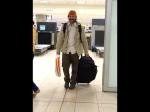
Our friend Josh Egedy visited us and we wasted no time in getting the junk show on the road. After Josh was briefly detained by Customs, we made it back to our place to dial the final agenda for his trip.

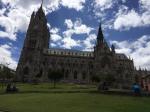
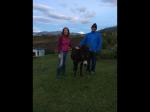
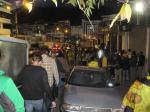
On the first day, we went for a bike ride in Parque Metropolitano and then visited Betsy at her school. Saturday, we went to Mercado Ofelia for some fresh vegetables followed by a trip to Mitad del Mundo, where Josh successfully balanced an egg on end bringing great pride to all around him. We rounded out our day with a trip to Old Town.

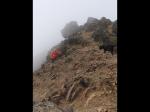
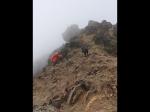
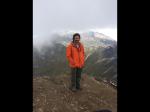
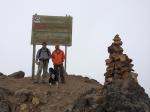
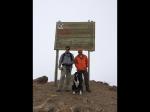
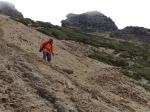
Sunday, Betsy joined the party with a big hike up Pichincha from the Rucu Pichincha side (see previous posts). She made it to the top for the first time which was a big accomplishment since the last time she tried she didn’t make it because her ACL was torn and we didn’t know it. In usual fashion, we literally had to run back to the car because a storm was coming in and there was great concern the 4×4 road would become impassable.

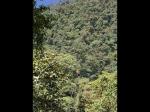
Tena was on the agenda for Josh and I for Monday where we had an overnight river trip and jungle hike planned. On the way to Tena I noticed numerous landslides in the distance which would provide some foreshadowing. We stopped off at “monkey island” where we spotted, yes, monkeys.

Since Betsy and I had such a great time on our raft trip with River People, that was the company Josh and I used. With the first paddle stroke of the trip 30 seconds in, I fell off the boat. No harm, no foul. The river was up and flowing fast since it was rain fed and the area had received significant rain (landslides). It rises and falls so quickly that the guides took an early lunch to let the river go down. It happens that fast. Promptly after lunch we hit a big train of three significant waves. The first wave hit hard, dumping a passenger out of the boat. Jan popped up in front of the boat and, upon the guide trying to rescue her which required him to vacate his position steering, the boat flipped when it hit the second wave.  By the time passengers made it to the boat to hang on, the guide was already on top of it clipping in to flip it back over. Not all passengers were accounted for but the throw bags and support kayak quickly corralled the stragglers. Good times.

We regrouped and put a nice rest of the day together. Two guides, Josh, and myself split off from the group to set up camp at a site on the river. Even though the guides set their tents up on higher ground, when we asked about our site selection they said we would be “fine”. That afternoon, some attempts at fishing were made, however, we were informed by a local that approached us that the good fishing didn’t start until after dark. Who knows if he knew what he was talking about because he said it wasn’t going to rain that night and it did. Very much so. Side note, this is a quote from Josh just before we met our local friend: “Roman, there’s a guy coming towards us with a machete. Any thoughts on that?”

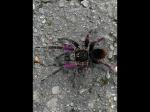
Just before dinner it started to rain. It didn’t stop until morning. We had a nice dinner under a thatched hut, adoringly referred to as the “spider tent”. Seemingly everywhere in the roof reeds there were elaborate webs with different kinds of spiders, waiting. Some were fuzzy and big and others, which I particularly liked, were shiny and angular. If Ferrari built a spider it would be these. I can’t find any photos, perhaps because were too busy capturing and throwing crickets into the webs and watching nature run its course. The guides weren’t scared of the spiders. What they were scared of were these tiny ants running into and out of a tree a few feet away. Apparently, the bite hurts for a couple of days. The words “numbness” and “swelling” were thrown around pretty liberally.

In the middle of the night, the soothing sound of pattering rain on my tent was interrupted when Josh banged on it, very sternly stating, “Roman! The river has come up. We’ve got to move our tents!” We moved our tents to the only dry spot around, under the spider tent. Double and triple checking our tent zippers for entry points, we went back to bed. By this time, our previous real estate was under shallow water.

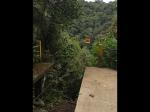
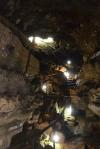
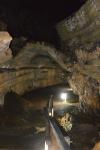
After a quick paddle out the next day, dinner, and solid night’s sleep, we packed up to return to Quito, stopping for our Jungle tour. The first part of the tour was on private property and the son of the owner gave us a great tour of some caves. The second part of our tour was to a waterfall in a primary jungle. Back in the car, we were making great time until we hit a wall of traffic. A land slide had poured over the road and everyone was waiting for the front-end loader to come and clear the way. It took a while for the machine to get there, but when it did it got right to work….until it ran out of gas….and more mud poured over the road. When the machine breached the other side, eight hours had passed. We finally were on our way…until were were stopped by yet another land slide. The sleeping bags came out and we spent the night in the car. Briefly after dawn the road was cleared and we made it back to Quito. We made the most out of Josh’s last day in Quito getting ready for the next leg of our trip, Cuba.

Rucu Pichincha

Behind Wawa Pichincha, the volcano seen from the city of Quito, is Rucu Pichincha, its blown out neighbor.  About a month ago while Betsy was at the beach for a ladies weekend, I drove up to Rucu Pichincha with some folks from the school to check out the caldera.

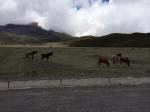
The weather didn’t cooperate that day and a fierce fog filled the caldera.  A return trip would be necessary to see into it.  All was not lost as a short hike revealed a variety of high alpine flowers and plants as well as several wild horses.

On the way back down to Lloa, the town that accesses Rucu Pichincha, we saw a paragliding lesson taking place. Once in Lloa, we stopped for lunch. Lucky for us, we stumbled upon their annual bull fight celebration. It was a very festive atmosphere matched by great music and food. The bull ring was recessed into the ground so spectators could sit around with an unobstructed view of the action. Literally, anyone could jump down in there. Though the bulls were small and I was tempted, I opted for the safer choice of spectating. Thankfully, no animals were harmed. However, one participant wasn’t so lucky. He thought it would be a good idea to stand on a beer crate and jump over a charging bull. He slipped when he jumped, perhaps because he was wearing casual loafers, and didn’t clear the animal. After getting roughed up a little, he limped away to an awaiting ambulance. One bull was smart enough to make its way behind one of the wooded protector walls surprising everyone, including the participants perched on the once secure wall.

It was a great day with one surprise after the other.

Quilotoa

So much has happened since our last post, we are having to go back about a month.

Betsy and I went to Quilotoa, a crater lake about 2.5 hours south of Quito.  We hiked around the caldera, about 10km in circumference.  This was a big accomplishment because it was the biggest test for Betsy’s knee since her surgery.

The next day, we took a short, but steep drive west out of the valley to a ridge.  From around 12,000′ we were told we could see the coast.  Unfortunately, the coast was socked in.  Still, it made for some great photos to be high above the clouds.

La Visita de Nuestros Amigos, Carlos and Sarah

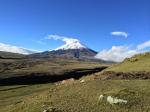
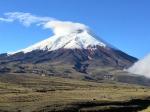
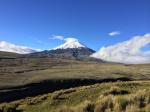
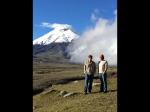
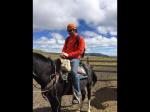
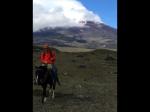
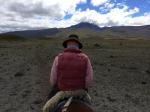
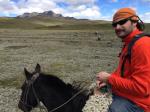
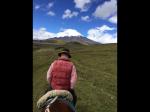
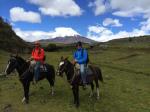
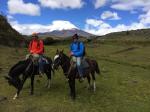
A few weeks ago, Carlos and Sarah visited us and spent time exploring Ecuador. Carlos arrived a few days before Sarah and hit the ground running. Roman and Carlos first traveled to Cotopaxi National Park where they enjoyed the beautiful views of the volcano and did some horseback riding. On Friday, they rode the teleferico in Quito and hiked to the top of the Pichincha volcano (over 15,000 feet) with Lucy.

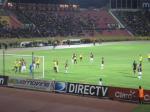
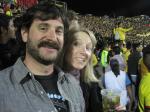
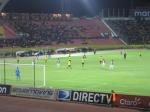
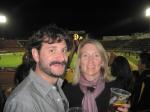
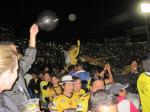
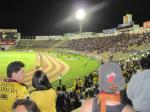
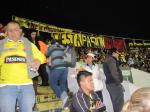
After Sarah arrived, we all traveled to Otavalo for a night and went to the textile market. When we returned to Quito on Monday evening, we got to see a soccer match between rival teams Barcelona (Guayaquil) and Deportivo Quito at the stadium right by our apartment.

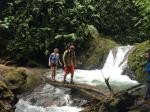
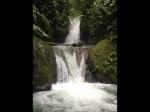
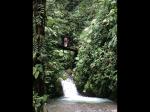
After a day spent touring around Old Town, Roman, Sarah, and Carlos headed off to Mindo for a few nights. They saw a lot of interesting bird species, went zip-lining through the rainforest canopy, and hiked to a few waterfalls. The trip went by so fast and we miss them already! There are so many more things that we saw and did while they were here but I will let the pictures tell the rest of the story.

Puerto Cayo

For Betsy’s spring break we drove to Puerto Cayo, about 450 KM southwest of Quito.  We were purposely seeking out a quiet place to just sit and do nothing and we found every bit of that there.

The home we rented was a brand new container home consisting of three converted shipping containers across the street from the beach.  We’ve never been in one before and it was pretty neat.

Our days were simple ones: we would get up, have some breakfast, and go out to the beach and set up for a day full of reading, sleeping, and getting in the water.  At the end of the day after watching the sunset we would drive into town for dinner and, on a few nights, watching soccer.

A highlight for me was definitely the lack of regulations. One day, when we drove to the main beach, things were so slow you were permitted to drive on to the beach and right up to the cabana you were renting.  Truly a novelty.

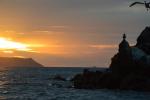
The sunset photos were taken over the entire week.  It was a great trip.

The Galapagos Islands

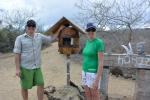
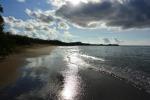
It’s one of those places you see on National Geographic; videos of “only so many of these in the world” species simply going about their daily lives being extraordinary.  You think the close ups and rare encounters are only reserved for film crews.  All of that went out the window when we got to the Galapagos Islands.  It’s all there and in your face and if you’re not careful you will literally trip over one of these creatures.

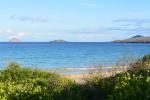
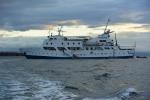
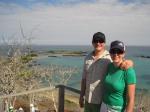
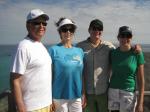
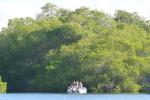
We (my Dad, Holly, Betsy, and Myself) were on a boat for the entire trip.  It was truly a fortunate experience because there are places you simply cannot reach on a day trip from one of the main areas.  I’ve never “been at sea”, so it was pretty neat.  Much of the travel was done at night, so you wake up to a different, yet somehow familiar scene; a seemingly untouched island that you feel you’re the first to discover.  Often the only hint of man’s interference is a wooden white and black stake driven into the ground delineating where you could walk.  Guides were quick to keep you on track and a reasonable distance from the wildlife.  The management of the entire area was impressive.

Recounting the entire trip day by day and activity by activity would fill many pages.  The itinerary was full to say the least and was not for the casual explorer.  For nearly everyone on our boat this was a once in a lifetime experience and if we were anchored to a place where a specific species/plant/geologic formation existed, by God you were going to see it.  At least that’s what the posted itinerary suggested.  Up early, breakfast, panga excursion to see something, back to the boat, change of clothes, back out to see something else, back for lunch, etc.  Once you bought into the pace it was exciting to keep up and look forward to the next excursion.

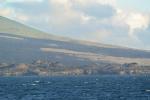
Our island itinerary was as follows: D1- Baltra & North Seymour, D2 – South Plaza & Santa Fe, D3- San Cristobal (Pitt Point & Cerro Brujo), D4- Floreana (Post Office Bay & Cormorant Point), D5- Isabela (Elizabeth Bay & Moreano Point), D6- Santa Cruz & Baltra for departure.  I know we did not see everything, but it felt like it.

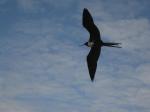
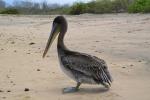
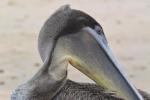
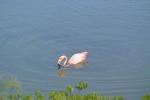
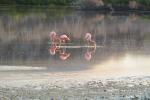
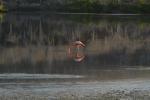
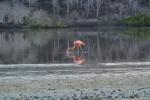
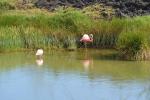
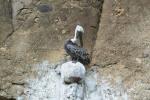
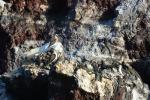
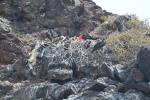
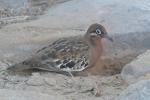
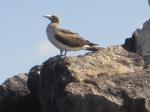
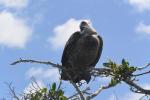
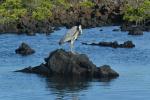
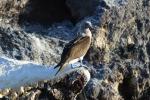
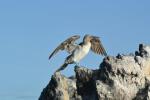
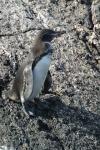
Birds- Boobies, Gulls, Flamingos, Wrens, Herons, Penguins (yes, penguins), Short-Eared Owl, Cormorants, Frigates, Finches, and others.

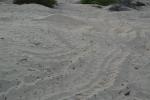
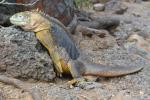
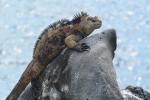
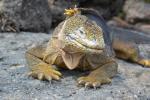
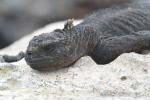
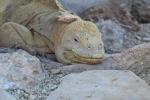
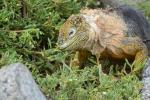
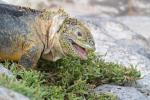
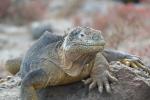
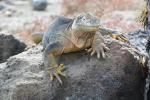
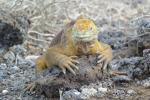
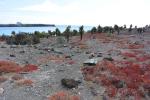
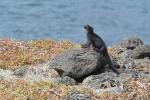
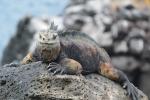
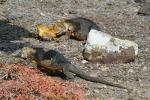
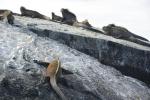
Iguanas- Both land and Sea.  Eating, sleeping, fighting, posturing, and scampering.  Different patters, different sizes, different colors, different spines.  It all meant something.

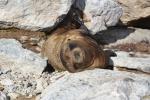
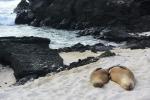
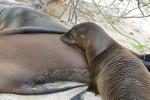
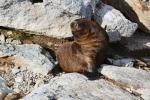
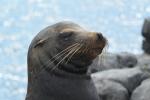
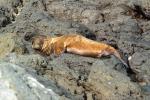
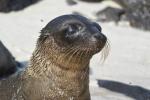
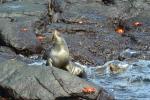
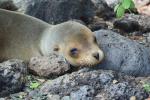
Sea Lions- playing, bathing, fighting, “walking”, nursing, swimming, barking, and posing.  Sea lions especially had no fear of people.  They literally would swim up to and around you to see what you were all about.

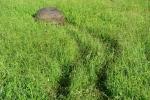
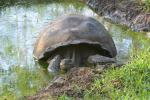
Tortoises- There they were, just going about their day.  The only thing that could have been better would be to set up a lawn chair and simply watch them.  Slow, methodical, and sloppy Yoda’s all strewn about.

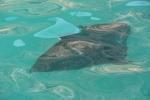
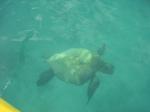
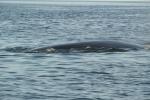
Sea Life- Scores of fish both large and small.  Colors of the rainbow.  Red, blue, black, yellow, purple, spots, stripes, almost glowing.  Schools…Schools of fish like you read about, all moving at once.  Sort of like how powder moves around you on a deep day.  Puffer fish.  Parrot fish both young and old with different colors.  Sea Urchins, Sea Horses, White Tipped Sharks, Rays, and Sea Turtles.  We even got to see Baleen Whales.  I would say the highlight was snorkeling will nearly all of these at once.  Moving through fish into a school of sharks that were being chased by sea lions.  Unbelievable.

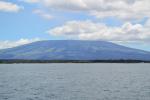
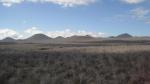
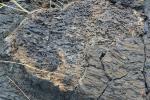
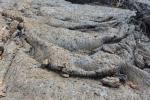
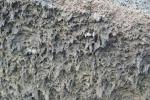
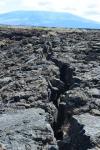
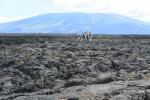
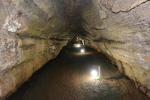
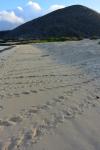
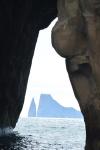
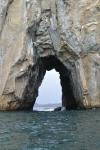
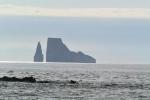
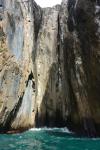
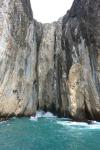
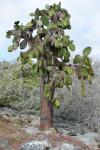
Landscapes- Everything is a volcano.  Some islands are lush and have trees and grass.  Some are dry and have cacti and low bushes.  Some are crumbled piles of lava.  Some islands rise vertically out of the ocean.  Some do not. Lots of ripples, hardened oozes, and, drips.  Very melty.  On our last island we were able to walk down into a lava tunnel.  You can literally point to a feature and dissect it as if it fell out of a textbook.   I felt smarter for being there, even though it was short lived.

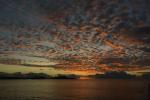
One of the anticipated, though not promoted, parts of the trip was being able to see the stars for the first time since I moved to Ecuador.  Since moving here, any time I’ve been out at night there’s been something: light pollution, clouds, rain, the threat of rain, fog, mist, etc.  I saw the Southern Cross for the first time.

Betsy and I are both thankful to have gone and hope to return.  It was special for both of us and we’ll take many things away from it.  There were numerous times we looked at each other wondering if the other saw the same thing.  It was truly amazing.

Otavalo

About two hours northeast of Quito is Otavalo.  Their daily, and much larger weekend market, showcases the best of what the textile epicenter of Ecuador has to offer; scarfs, blankets, sweaters, table coverings, hats, and more.  The most well known items are those made from Alpaca, quite possibly the softest fabric ever.

When we arrived at our lodging, we were excited to find that it was high above Otovallo, complete with panoramic views.  There were farms all around, even touching the property we were on.  In fact, there were some animals on property.

Excited to get out right away, Betsy, Lucy, and I hiked to a nearby waterfall.  You would have never known it was there.

We put a big Saturday together.  First, we stopped by the weekly animal market.  This is a place where farmers buy and sell livestock.  The organized chaos was a sight to be seen.  Though interesting, we were excited to get to the textile market.  Located in the center square of town, the market is a daily occurrence.  However, on the weekends the size of it more than doubles, spidering out on surrounding closed streets.  After row and row of offerings your brain just starts taking in colors and the items almost disappear.  I caught myself needing to actively look for items we wanted to buy rather than aimlessly wander.

After the market and lunch we took our vehicle to Lago Mojado, a high alpine lake at tree line readily accessible by vehicle.  We enjoyed sitting by the lake for a bit.  It felt very much like Colorado.  We also got the opportunity for a little “adventuring” in our vehicle.

Otovalo is another place we look forward to visiting once again.

Jungle Boogie

Last weekend we drove to Tena with our friends Nick and Vanessa and Vanessa’s visiting cousin, Tom.  Tena’s on the other side of the mountainous and volcanic terrain that Quito is part of (about a 4 hour drive away) and has been the traditional jumping off point for trips into the Amazon.  Though Mindo was our introduction to the jungle, Tena is the kind of jungle you read about; big insects, large leaved plants, and lots of rain.  We were lucky to discover that Tena was celebrating its founding that weekend.  The two day festival had live music, tons of people, and lots of food vendors.

We stayed in the Pakay eco-lodge.  The cost of our stay at the Pakay included a fantastic breakfast of fruit, bread, spreads, and pancakes or eggs.  A great way to start the day.

Our first day, we went rafting down the Hollin and Jongachi Rivers.  River People, the guide company we used, pioneered the routes down the local rivers and did a great job of balancing safety and adventure.  After a 45 minute hike down to the put in, we were off.  The water was an amazing temperature, and a far cry from the snow fed rivers in Colorado, as the rivers here are primarily fed by rain water.  Conditions were favorable even though the rainforest was in the middle of its dry season since it had been raining hard for a few days.

The trip took most of the day.  That evening we went out in Tena, taking in the festival and even finding a cocktail bar opened by an expat.  It was a nice respite from our two choices of drinks we’re generally exposed to here; Pilsener and Club brand beer.

On our way out of town back to Quito on Sunday we stopped at “Monkey Island”, a lodge property that accepted day guests to explore the grounds where a large group of monkeys resided.  It was amazing to see monkeys for the first time, though when the forest randomly moved and rustled around you it was a bit unsettling.  One monkey in particular put a bit of a show on for us.  We all sensed she was having a bit of fun and liked the attention.  Another neat discovery were countless leaf cutter ants.  They eat mold that grows on leaves they bring under ground into their nests.  Amazing.  We’ll definitely go back to the area.


Life’s a Beach

This last weekend Betsy had a long weekend from school for Cuenca Day (that town’s independence day from the Spaniards) so she, Lucy, and myself loaded into our recently new vehicle and drove 325 kilometers to the small fishing town of Tonchigue on the west coast of Ecuador.  We’re still figuring out the best way to get out of Quito on a Friday afternoon.  It feels like hand to hand combat.

The drive to Tonchigue was similar to other driving experiences we found in Ecuador.  Once past Mindo it was more of the same; a twisting road that climbs and descends, people passing on double yellow, and brush and bamboo that creep and lean over the road.  I like to think I pass with caution.  Towards the middle of the drive we turned onto an honest to goodness two lane road (each way) with a speed limit of 100kph.  Based on the radar displays along the way I can tell you that our vehicle is somewhere between 6-8 kph faster than the speedometer.  It’s good to know our ride can roll at a descent rate.  We finally rendezvoused with our group at the beach house and finally felt like weekend set in.

Where we were was on a stretch of beach north of the pueblita of Tonchigue and south of the nearly-as-small pueblita of Same (pronounced Sah-may).  The beach consisted of swaths of sand and patches of crushed sea shells and rounded pebbles.  Though there wasn’t any surf to speak of, the water was warm and it ran up onto the beach nicely.  As a bonus, our condo was located adjacent to a cemetery (think above ground Louisiana-style tombs) and as luck would have it, Sunday was Dia de los Difuntos (all souls day), commonly knows as Dia de los muertos (day of the dead).  It was actually pretty neat to see families making the pilgrimage to the cemetery to clean the area around their family member’s tomb, place flowers, and celebrate all day.  We saw a few hammered guys wobbling away after “paying their respects”.  It’s as good of an excuse as any.

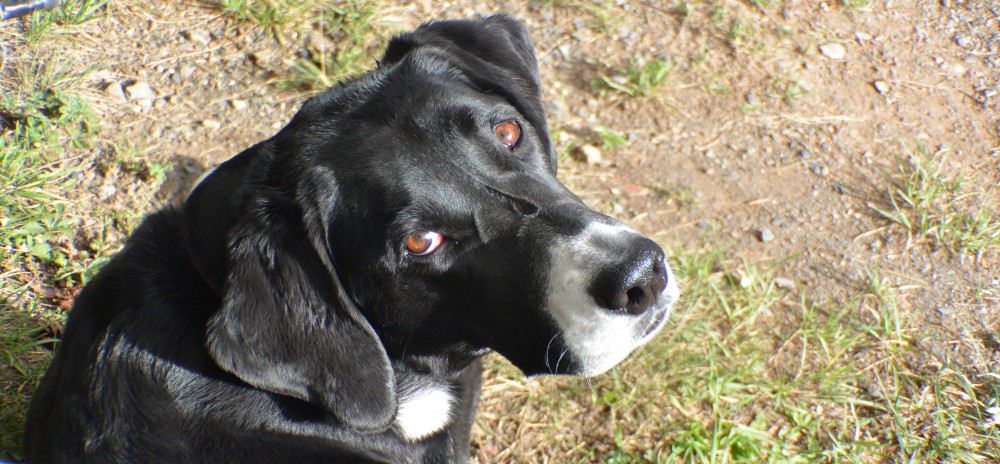
This was Lucy’s first time back to the beach since Betsy and I took her to California on our honeymoon.  She was only about 2 1/2 months old then.  It only took two or three waves crashing onto the beach for her to get the hang of things.  She played fetch with two other dogs on our trip until she was wiped out.

One of the neatest things I saw on the trip was the Sunday we were there.  Some kids who were part of the families at the cemetery were fascinated with Lucy as Betsy threw the Frisbee for her.  Remember that Lucy is somewhat of an anomaly in Ecuador.  Not a lot of people have dogs as pets and when they do they’re usually pretty small.  People are absolutely terrified of Lucy when they see her coming, often crossing the street to avoid her.  Anyway, the kids gathered around Betsy and it got to the point where they all took turns throwing the Frisbee.  Betsy got a kick out of connecting with the kids a bit.

It was a very nice weekend.  After some drinks, dinners, sun, and relaxation we rolled back to Quito.

New Ride

This post is two weeks over due.  However, we got a new vehicle!  It’s a 1995 Toyota Land Cruiser FZJ 73.  It’s built partially on the FJ 40 chassis, has Toyota’s 1-FZ-F engine, and built in the FJ 70 series style.  What that means is it’s off road capable, has a more powerful carbureted engine than previous models, and has a little more space than many other two doors in the country.  We think it’s going to be a great vehicle for us because it is durable and has enough space for all three of us and all of our stuff.

Our first weekend of owning it we drove it to Papallacta, a small, rural town a few hours east of Quito up in the mountains just north of Cotopaxi Volcano.  Once there, Betsy, Lucy and myself took a nice hike in the rain along a creek.  The hike went through a small organic farm and we saw our first Avocado Trees; lots of them.  There are a ton of outdoor opportunities near Papallacta and we can’t wait to get back.  It was liberating getting out of the city and this trip will be one of many.